Tess is a Senior Content Specialist at Superside, where she crafts compelling content for SMBs and enterprise businesses. With over 10 years of experience, Tess has honed her skills writing for both B2B and B2C audiences, working across agencies and in-house creative teams. Her expertise spans industries, including international relations, tech, hospitality, and the music industry, where she has a knack for blending storytelling with strategic insights. When she’s not busy writing, you’ll likely find her curled up with a good book, binge-watching the latest Netflix obsession or hiking.
Let’s make a bet.
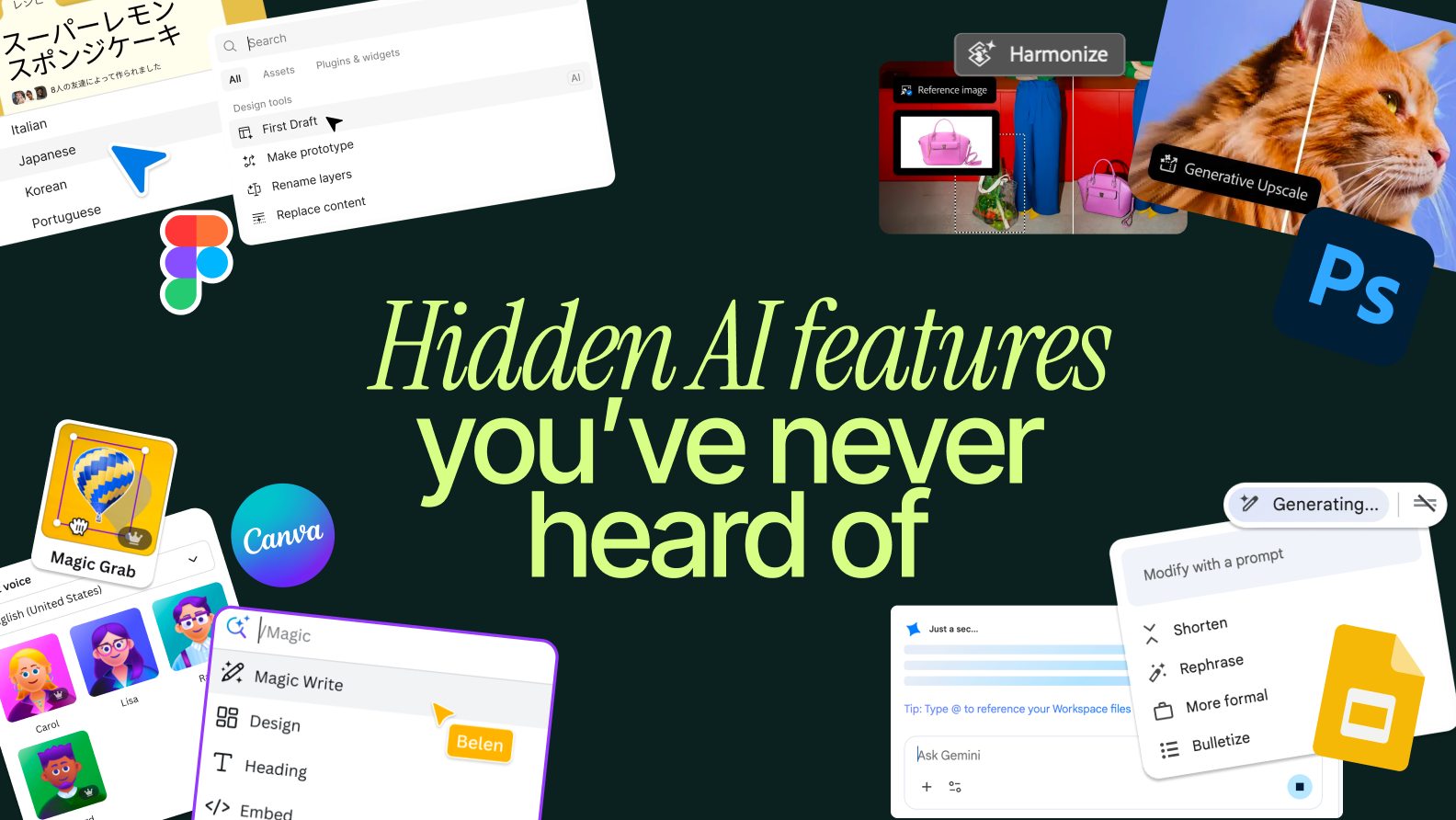
You use tools like Figma, Photoshop, Canva, and Google Slides almost every day, and still, you’re barely scratching the surface of what their AI can do.
What does it actually take to make AI work for creative teams, not just in theory, but in practice?
At Superside’s SHIFT Summit, we heard directly from the people navigating it in real time. From creative leaders rethinking workflows to building entirely new systems, one thing became clear: AI isn’t the breakthrough. How you use it is.
Creative teams don’t need more AI hype. They need practical, proven applications—and real results.
The real question is: where does AI actually create measurable capacity — and how do you apply it without sacrificing judgment?
AI isn’t short on hype—or expectations. But meeting those expectations takes more than plugging a tool into your workflow.
According to Superside’s Breakpoint research, 92% of executives expect higher-quality work because of AI. With 79% of teams feeling pressure to implement AI, it’s easy to move fast without setting standards.
Creative impact can’t be captured by a single metric or mood.
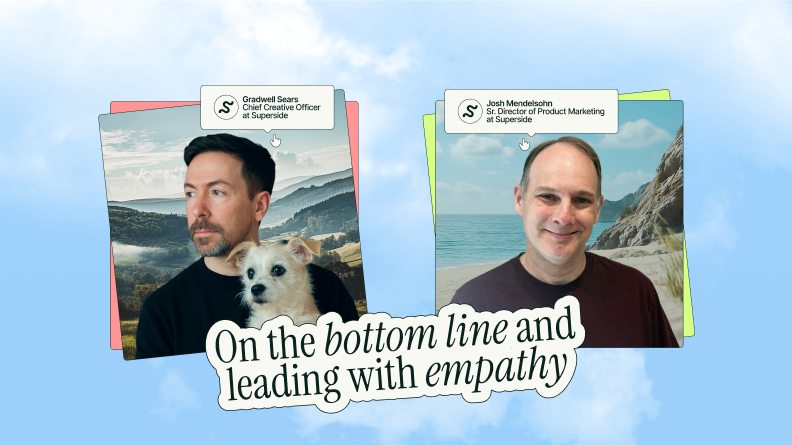
But it is visible in results—and few understand this balance better than Superside's Gradwell Sears, Chief Creative Officer, and Josh Mendelsohn, Senior Director of Product Marketing.
Great campaigns don’t just look good—they perform. But getting creative to yield real business results requires more than just good instincts or a clever tagline.
In today’s landscape, where every impression counts and attention is scarce, you need strategy. You need insight. And most importantly, you need alignment between the creative and the data.
There’s no singular formula for breakthrough creative.
But if there’s a throughline, it’s this: The formats you choose matter as much as the message you’re trying to send. In an era where attention is currency, getting the right mix of video, visuals and content isn’t just a nice-to-have—it’s a growth imperative.
When creative demand spikes but team size stays lean, many marketing and creative leaders face a familiar and pressing dilemma:
How do you scale output quickly without sacrificing quality or burning out your team?
In an era where video is one of the most powerful tools in a marketer’s arsenal, too many teams still treat it like a one-off deliverable. They respond to scattered requests, chase vanity metrics and end up stuck in a cycle of reactive production. But what if video could do more—much more?
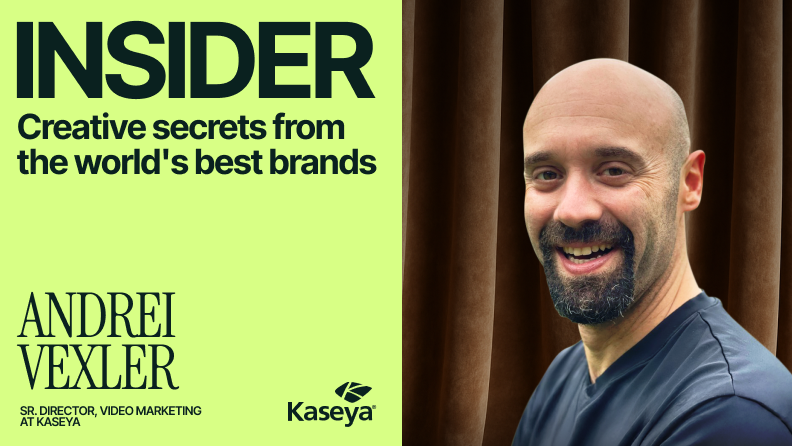
Andrei Vexler, Senior Director of Video Marketing at Kaseya, focused on this topic during Superside’s Insider Summit. Vexler drew on decades of experience across agency and in-house roles to show how a video strategy can evolve from a cost center to a growth engine. Through stories, frameworks and tactical advice, he outlined a model where video becomes a scalable, strategic function deeply tied to business outcomes.